Geomembranes for Mining: Reliable Containment Solutions by Macro Sheet India Limited

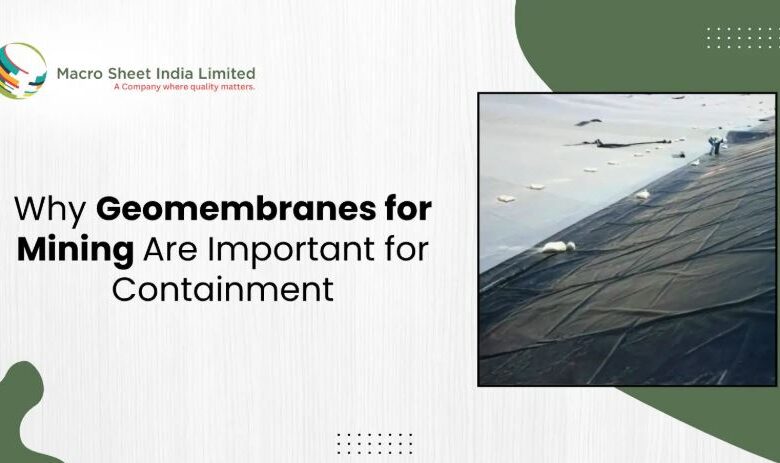
Mining operations require reliable containment systems to manage water, process fluids, tailings, and other materials. These systems help protect surrounding soil and groundwater while supporting efficient site management. Geomembranes for Mining provide an effective barrier solution for many mining applications because they offer low permeability and can help control the movement of liquids when properly selected and installed.
Macro Sheet India Limited is a company to consider when exploring geomembrane liner solutions for industrial and mining projects. Choosing the right liner requires careful attention to site conditions, chemical exposure, temperature, installation requirements, and long-term performance. With suitable material selection and quality installation, geomembranes can contribute to more reliable containment systems.
What Are Geomembranes for Mining?
Geomembranes are synthetic membrane liners designed to limit the movement of liquids and, in some applications, gases through a containment structure. Mining projects use these liners in engineered facilities where fluid containment and environmental protection are important.
High-density polyethylene (HDPE) is a widely used geomembrane material because of its chemical resistance, durability, and low permeability. Other materials may also be suitable, depending on the project specifications and operating conditions.
The selection process should consider the type of material being contained, exposure to chemicals, mechanical stresses, and expected service life. A properly designed geomembrane system works alongside suitable drainage, subgrade preparation, and protective layers to support effective containment.
Key Applications of Mining Geomembranes
Mining sites involve several activities that require controlled containment. Geomembrane liners can support different applications when engineers select suitable materials and installation methods.
Tailings Storage Facilities
Tailings storage facilities hold the residual materials produced during mineral processing. Depending on the facility design, geomembranes may be used as part of a liner system to reduce seepage and help protect underlying soil and groundwater.
The liner design must account for settlement, surface conditions, hydraulic loads, and the properties of the stored material. Engineers may also incorporate drainage and leak detection systems to improve monitoring and management.
Heap Leach Pads
Heap leaching is a mineral recovery process in which a solution passes through stacked ore to extract valuable minerals. Geomembranes are commonly used in engineered heap leach pad systems to collect process solutions and limit uncontrolled leakage.
These applications require careful material selection because the liner may experience chemical exposure, pressure from ore loads, and temperature variations. Proper seam welding and quality control are essential for reliable performance.
Process Water Ponds
Mining operations often need storage ponds for process water and other operational liquids. Geomembrane liners help reduce seepage and support controlled water storage when designed for the intended conditions.
The liner material should be compatible with the stored liquid and suitable for the pond’s operating environment. Proper anchoring, subgrade preparation, and protection from mechanical damage also contribute to system performance.
Evaporation Ponds
Some mining facilities use evaporation ponds to manage process water or selected residual liquids. Geomembranes can provide a low-permeability barrier that helps limit seepage into the surrounding ground.
Designers should assess chemical compatibility, ultraviolet exposure, wind conditions, and possible temperature changes. These factors influence material selection and installation planning.
Benefits of Geomembranes for Mining Projects
Mining geomembranes offer several advantages when incorporated into a properly engineered containment system.
Low permeability: Geomembranes help limit liquid movement through containment structures, supporting seepage control.
Chemical resistance: Suitable materials can withstand exposure to many mining-related chemicals, although compatibility must be verified for each application.
Durability: Appropriate geomembranes can perform under demanding conditions when installed, protected, and maintained correctly.
Environmental protection: Liner systems can help reduce the risk of uncontrolled seepage and protect surrounding soil and groundwater.
Flexible installation: Geomembranes can be manufactured and installed to suit different facility shapes, sizes, and project requirements.
These benefits depend on correct design, material quality, installation practices, and ongoing inspection. A liner alone does not replace the need for a complete containment and environmental management plan.
Choosing the Right Geomembrane Material
Selecting a suitable liner begins with understanding the project’s operating conditions. HDPE geomembranes are often considered for mining applications because of their chemical resistance and low permeability. However, no single material is ideal for every site.
Engineers should evaluate the chemical composition of the contained liquid, operating temperatures, exposure to sunlight, expected loads, and potential ground movement. They should also consider liner thickness, seam requirements, and the need for protective geotextiles.
Installation conditions are equally important. Uneven ground, sharp rocks, and excessive stress can damage a liner if the subgrade is not properly prepared. A complete design should account for these risks before installation begins.
Installation and Quality Control
Correct installation is essential to the performance of geomembranes for mining. Before placing the liner, the installation team should prepare and inspect the subgrade to remove sharp objects, unstable areas, and other potential sources of damage.
Panels are then positioned according to the approved layout. For thermoplastic geomembranes, compatible welding methods are used to join adjacent panels. Seam quality must be checked using appropriate inspection and testing procedures.
Quality assurance may include material verification, seam testing, visual inspections, and documentation of repairs. These measures help identify defects before the containment facility enters operation.
Protection during subsequent construction is also important. Equipment movement, material placement, and handling activities should be managed to avoid punctures or excessive stress on the liner.
Maintenance and Long-Term Performance
Regular inspection helps identify potential issues before they affect the wider containment system. Operators should monitor exposed liner surfaces, accessible seams, anchor trenches, drainage features, and areas where movement or damage may occur.
After unusual weather events or maintenance activities, additional inspections may be appropriate. Any suspected damage should be assessed and repaired using procedures approved for the installed geomembrane material.
A documented inspection schedule supports consistent monitoring throughout the facility’s operating life. Proper drainage, controlled access, and suitable protective layers can further reduce avoidable damage.
Why Consider Macro Sheet India Limited?
Selecting a geomembrane supplier is an important step in planning a mining containment project. Buyers should review material specifications, product quality documentation, available technical support, and suitability for the intended application.
Macro Sheet India Limited is a name to consider when researching geomembrane liner solutions. Before finalising a product, share the project’s technical requirements, including the application type, chemical exposure, site conditions, and relevant design specifications.
Working with suitable materials and an appropriate installation plan can help project teams establish containment systems that support operational needs and environmental management objectives.
Frequently Asked Questions
1. What are geomembranes for mining used for?
Geomembranes are used in mining containment systems, including tailings facilities, heap leach pads, process water ponds, and evaporation ponds, to help control seepage.
2. Which geomembrane material is commonly used in mining?
HDPE is widely used because of its low permeability and chemical resistance. The most suitable material depends on the contained substance and site conditions.
3. How do mining geomembranes help protect the environment?
When correctly designed and installed, geomembrane liners help reduce uncontrolled seepage and support the protection of surrounding soil and groundwater.
4. Why is geomembrane installation quality important?
Poor subgrade preparation, defective seams, and mechanical damage can affect liner performance. Inspection and seam testing help identify potential problems.
5. How can I choose a suitable mining geomembrane?
Evaluate chemical compatibility, liner thickness, temperature, mechanical loads, site conditions, installation requirements, and project specifications before selecting a product.
Conclusion
Geomembranes for Mining are an important part of many engineered containment systems. They help manage seepage risks in applications such as tailings storage, heap leach pads, and process water ponds. However, reliable performance depends on suitable material selection, careful installation, quality control, and regular inspection.
Macro Sheet India Limited can be considered when exploring geomembrane liner options for mining projects. By matching the liner to the site’s technical requirements and following appropriate engineering practices, mining operators can support effective containment and responsible environmental management.