

Numbers appear in almost every part of everyday life, from classroom exercises and historical documents to clocks, book chapters, and important events. However, not every number system follows the familiar decimal format. Roman numerals use specific letters to represent numerical values through an ancient counting method. Roman Numbers Conversion helps students, teachers, professionals, and curious learners understand these symbols and translate them into ordinary numbers. With digital resources such as K4Converter, users can simplify calculations, check unfamiliar combinations, and learn the rules without spending unnecessary time on manual calculations.
Understanding the Foundation of Roman Numerals
Roman Numbers Conversion originated in ancient Rome and developed into a number system that remained useful across different generations. Instead of using digits from zero to nine, this system combines seven primary letters to represent values. These symbols include I, V, X, L, C, D, and M. Each letter represents a fixed quantity, allowing users to construct larger numbers through addition and subtraction.
The system follows specific placement rules rather than ordinary decimal positions. For example, placing a smaller symbol after a larger one generally adds its value. However, positioning a smaller symbol before a larger symbol indicates subtraction. Understanding these basic principles makes unfamiliar numerical combinations easier to interpret and calculate correctly.
Roman Numbers Conversion Through Seven Essential Symbols
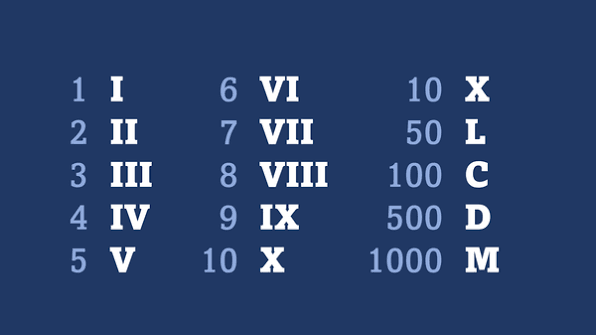
Learning the seven main symbols provides a strong starting point for understanding this traditional numbering method. Each character represents a particular numerical value, and combinations create different results.
| Roman Symbol | Numerical Value |
|---|---|
| I | 1 |
| V | 5 |
| X | 10 |
| L | 50 |
| C | 100 |
| D | 500 |
| M | 1000 |
For instance, II represents two, while VIII represents eight. Similarly, XX indicates twenty, and LX represents sixty. These examples demonstrate how repeated or combined symbols communicate different quantities. Once learners become familiar with these characters, reading dates, chapter numbers, and historical references becomes considerably easier.
Important Rules Behind Correct Numerical Interpretation
Roman Numbers Conversion follow a structured set of conventions. Repetition allows certain symbols to express larger values, but not every character can appear repeatedly without restrictions. Generally, I, X, C, and M may repeat up to three consecutive times. Meanwhile, V, L, and D do not repeat in standard notation.
Subtraction follows another important convention. I can appear before V or X, X before L or C, and C before D or M. Therefore, IV represents four, IX represents nine, XL represents forty, and XC represents ninety. These rules help prevent incorrect combinations and maintain consistency across written numbers.
Roman Numbers Conversion for Everyday Applications
Roman numerals remain visible in several modern settings despite the widespread use of decimal numbers. Watchmakers frequently display them on traditional clock faces, while publishers use them for introductory pages, prefaces, and book sections. Educational institutions also include Roman Numbers Conversion in lessons involving mathematics and historical studies.
For these purposes, Roman Numbers Conversion allows readers to identify numerical information quickly. It can also help students complete assignments involving ancient numbering systems. Additionally, event organisers sometimes use Roman numerals to distinguish annual celebrations, editions, or major occasions. Understanding the notation therefore remains useful beyond classroom learning.
Using K4Converter for Convenient Digital Calculations
Manual calculations can become confusing when numerical combinations contain several subtraction and addition rules. K4Converter provides a convenient digital resource for users who want to simplify different conversion activities. Instead of checking every symbol separately, users can explore online conversion tools to obtain results more conveniently.
Digital conversion also reduces the possibility of overlooking an important placement rule. Students can use the results to review their calculations, while professionals can save time when interpreting unfamiliar numerical references. Nevertheless, users should understand the underlying rules because learning the method helps them recognise incorrect notation and verify results independently.
Common Mistakes That Affect Roman Numeral Accuracy
Beginners sometimes assume that every symbol can appear repeatedly or that any smaller character can precede a larger one. However, standard notation permits only specific subtraction combinations. Writing IC for ninety-nine, for example, is incorrect. The accepted representation is XCIX.
Another common mistake involves confusing addition with subtraction. IX represents nine, whereas XI represents eleven. Their symbols are identical, but their arrangement changes the result. Therefore, readers should examine the order carefully before interpreting a combination. A reliable conversion process considers each character, applies the correct rule, and checks the complete numerical value.
Png To Jpg Converter for Flexible Image Formats
Alongside number-related utilities, image conversion tools help users manage different digital file requirements. A Png To Jpg Converter changes PNG images into JPEG format, which can make files more convenient for websites, sharing, and storage. PNG generally supports transparent backgrounds and lossless image quality, whereas JPEG uses compression that can reduce file size. However, JPEG does not preserve transparency, so transparent areas may receive a solid background during conversion. Users should select the appropriate format according to image quality, background requirements, and intended use.
Benefits of Learning Traditional Number Systems
Studying Roman Numbers Conversion develops logical thinking and improves attention to numerical patterns. Learners become more comfortable identifying relationships between values and understanding how symbol placement changes meaning. Moreover, this knowledge creates a connection with ancient history, architecture, literature, and cultural traditions.
Teachers can introduce the system through simple examples before moving towards complex combinations. Parents can also encourage children to recognise numeral patterns on clocks and in books. With regular practice and useful digital resources, learners can develop confidence without memorising every possible numerical combination.
Conclusion
Traditional numbering systems continue to hold educational and cultural importance in the modern world. Understanding their symbols, placement conventions, and subtraction principles makes unfamiliar numerical references easier to interpret. Roman Numbers Conversion provides a practical way to translate these combinations accurately for academic and everyday purposes. With K4Converter, users can explore convenient digital utilities while improving their understanding of different conversion methods. Combining basic knowledge with appropriate online tools creates a simpler approach to calculations and helps learners handle numerical information with greater confidence.