
Mixing plays an important role in many industrial processes, from preparing chemicals to producing coatings, food ingredients, and water treatment solutions. An Industrial Agitator helps combine materials, maintain uniformity, and support steady production across different operating conditions. The right equipment can reduce settling, improve heat transfer, and keep product quality within defined limits with an Industrial Agitator. However, every process has its own demands. Material viscosity, tank dimensions, batch size, and mixing time all influence equipment selection. Understanding these factors helps plant teams choose a practical solution and avoid unnecessary operating costs.
The Role of an Industrial Agitator in Production
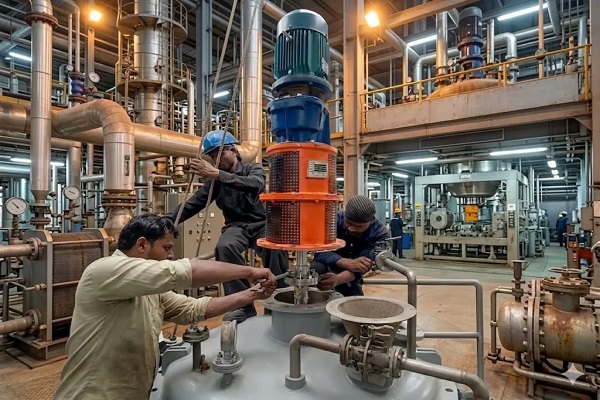
Inside a tank or vessel, an Industrial Agitator creates movement. Its rotating impeller transfers energy to the material and produces a flow pattern suited to the process. This movement lets an Industrial Agitator blend liquids, suspend solids, disperse powders, or support chemical reactions. As a result, manufacturers can maintain consistent product properties from one batch to another.
Different industries use mixing equipment for different purposes. Chemical plants may need controlled blending of reactive ingredients. Pharmaceutical facilities often require repeatable mixing and careful process control. Food manufacturers may focus on texture, hygiene, and gentle handling. Water treatment operations need effective chemical distribution. Therefore, the agitator design should match the material and the required outcome rather than follow a one-size-fits-all approach.
Key Design Factors That Shape Mixing Performance
Tank geometry is a starting point. Diameter, height, bottom shape, and internal fittings affect liquid circulation. The impeller in an Industrial Agitator must also suit the vessel dimensions. A poorly matched design can create dead zones, uneven blending, or excess turbulence.
Material properties matter just as much. Low-viscosity liquids usually move easily, while thick fluids need greater torque. Engineers assess these details before recommending an Industrial Agitator for a particular duty.
Operating speed is another important consideration. Higher speed does not always mean better mixing. It can increase power use, create unwanted foam, or damage sensitive materials. A suitable speed range helps an Industrial Agitator balance mixing quality with energy consumption and product protection.
Common Industrial Agitator Types and Their Uses
Propeller agitators produce axial flow and work well with low-viscosity liquids. They can support blending, circulation, and heat transfer in suitable tanks. Turbine designs create stronger flow and are often selected for gas dispersion, liquid blending, and solid suspension.
Paddle agitators offer a simpler mixing action for moderate or higher-viscosity materials. Anchor designs move close to the vessel wall and can help manage thicker products. For demanding applications, a high-shear mixer may be used to break down droplets or disperse fine particles.
Benefits of Choosing Equipment Around the Process
When correctly selected, an Industrial Agitator can improve batch consistency. When ingredients circulate evenly, operators are less likely to find concentration differences or material deposits. These results support predictable product quality and reduce the need for repeated processing.
An efficient Industrial Agitator can also help control energy use. The impeller, motor, gearbox, and drive should work together at the required duty point. Oversized equipment may consume more power than necessary, while an undersized unit may struggle to meet production targets.
Maintenance planning is equally important. Accessible seals, suitable bearings, correct lubrication, and a stable shaft arrangement can support dependable operation. Regular inspection helps identify vibration, leakage, unusual noise, or wear before these issues cause extended downtime. Premix Technologies focuses on process requirements when helping customers assess industrial mixing needs and equipment suitability.
Installation, Safety, and Routine Care
Before installation, teams should confirm foundation strength, alignment, electrical supply, and vessel support. Guards and isolation procedures also protect workers during operation and maintenance.
During operation, staff should follow the recommended speed and loading limits. Starting a mixer in a heavily settled or overloaded vessel can place unnecessary strain on the drive system. Operators should monitor an Industrial Agitator for sound, temperature, vibration, and product behaviour.
Selecting a Supplier for Industrial Mixing Equipment
A capable supplier should ask detailed questions about the process. Useful information includes the liquid or slurry properties, tank size, batch volume, operating temperature, required mixing time, and desired result.
Consider service support, spare part access, fabrication standards, and documentation before choosing an Industrial Agitator.
Ph Correction Injection Package Manufacturer
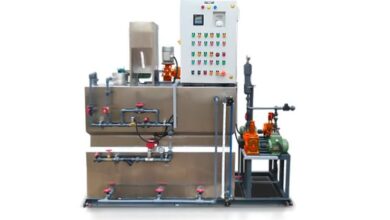
A process facility may also need accurate chemical dosing alongside its mixing system. A Ph Correction Injection Package Manufacturer can provide equipment designed to add treatment chemicals at a controlled rate, based on process conditions and operating requirements. Such packages may include dosing pumps, storage arrangements, instruments, control panels, and safety features. Correct sizing and integration help maintain the required pH range while supporting safe chemical handling.
Improving Results Through Better Process Review
Mixing performance should be reviewed using measurable process outcomes. Teams can check blend time, product uniformity, suspension quality, power demand, and batch repeatability.
A well-selected Industrial Agitator supports more than movement inside a tank. It contributes to process control, production planning, and consistent output.
Conclusion
Choosing an Industrial Agitator begins with understanding the material, vessel, and intended mixing result. Impeller type, speed, torque, tank design, and maintenance needs all influence performance. Careful selection can improve consistency, reduce avoidable energy use, and support safer plant operation. Premix Technologies encourages a process-led approach that considers real operating conditions before equipment decisions are made. With accurate data, suitable design, and routine care, manufacturers can build a mixing system that supports dependable overall production over time.