

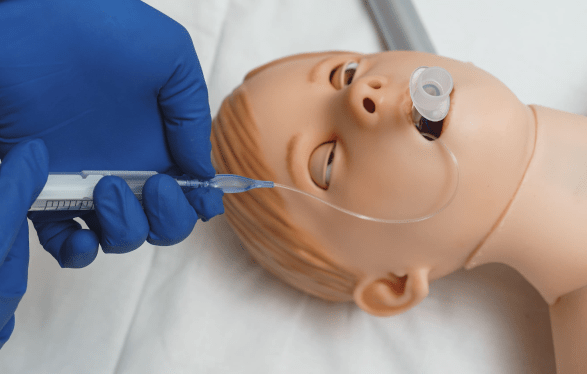
Healthcare education demands practical learning experiences that prepare students and professionals for real clinical situations. Modern medical institutions increasingly rely on a Pediatric Patient Simulator to provide safe, realistic, and repeatable training without putting actual patients at risk. Through advanced technology, learners gain confidence while developing essential clinical skills. Training with simulation allows repeated practice, immediate feedback, and improved decision-making before entering real healthcare environments.
Importance of Simulation in Pediatric Patient Simulator Medical Training
Children have unique anatomical and physiological characteristics that require specialized knowledge and careful clinical assessment. Traditional classroom teaching provides theoretical understanding, but practical experience is equally important. Simulation bridges this gap by creating realistic patient scenarios.
Medical educators use a Pediatric Patient Simulator to teach examination techniques, emergency response, airway management, medication administration, CPR, and patient communication. Because learners can practice repeatedly, they improve their confidence while reducing clinical errors. Simulation-based learning also encourages teamwork, leadership, and critical thinking during challenging situations.
Healthcare organizations worldwide recognize that simulation significantly improves knowledge retention. Students learn faster because they actively participate instead of simply observing demonstrations.
Features That Improve Learning Outcomes
Modern simulation technology offers numerous realistic capabilities. Institutions selecting a Pediatric Patient Simulator should consider features that support comprehensive medical education.
Important capabilities include realistic breathing patterns, heart sounds, lung sounds, pulse points, airway management options, programmable vital signs, intravenous access, medication administration, and emergency scenario customization. Some models also simulate seizures, cyanosis, bleeding, and respiratory distress.
These advanced features enable educators to create various clinical situations that accurately reflect hospital environments. Learners become familiar with patient assessment while improving diagnostic accuracy and treatment planning.
Another advantage is data-driven performance evaluation. Trainers can monitor learner progress and provide structured feedback that enhances long-term skill development.
Applications Across Medical Institutions
Simulation technology benefits many healthcare organizations. Universities, nursing colleges, emergency response academies, hospitals, military medical centers, and paramedic training institutes all integrate simulation into their educational programs.
Using a Pediatric Patient Simulator, instructors design structured lessons ranging from basic physical examination to advanced pediatric emergency care. Students gradually progress from foundational skills to complex multidisciplinary scenarios.
Simulation also supports continuing medical education for experienced healthcare professionals. Regular practice helps maintain competency while introducing updated treatment protocols and evidence-based clinical practices.
Because training occurs in a controlled environment, educators can pause scenarios, explain procedures, and repeat exercises until learners achieve proficiency.
Advanced Breast Examination Trainer
Medical education extends beyond pediatric care and includes specialized clinical skill development. An Advanced Breast Examination Trainer enables healthcare professionals to practice accurate breast examination techniques using highly realistic anatomical models. Learners improve their ability to identify normal tissue, recognize abnormalities, and develop confidence in performing sensitive examinations with professionalism. This specialized simulator supports nursing education, physician training, diagnostic skill enhancement, and standardized clinical assessment while promoting patient safety and improving examination accuracy through repeated hands-on practice.
Benefits for Students and Healthcare Professionals
Simulation transforms learning into an engaging experience. Instead of memorizing procedures, students perform them under realistic clinical conditions. A Pediatric Patient Simulator allows repeated exposure to uncommon medical emergencies that may rarely occur during hospital rotations.
Repeated practice strengthens procedural memory while reducing anxiety. Students become more comfortable making rapid clinical decisions under pressure.
Healthcare professionals also benefit from interdisciplinary simulations involving doctors, nurses, respiratory therapists, and emergency teams. These collaborative exercises improve communication, coordination, and patient management during critical situations.
Simulation-based education ultimately contributes to better healthcare outcomes because clinicians enter real practice with stronger practical experience.
Why Choose MAVERICK SIMULATION SOLUTIONS LIMITED
Selecting the right simulation partner is just as important as choosing the equipment itself. MAVERICK SIMULATION SOLUTIONS LIMITED delivers innovative medical simulation technologies designed to meet evolving educational requirements.
Every Pediatric Patient Simulator solution is developed with attention to realism, durability, educational value, and ease of operation. Institutions receive dependable products that support structured learning across undergraduate education, postgraduate training, nursing programs, and professional development.
The company focuses on helping educators build effective simulation laboratories capable of supporting diverse healthcare disciplines. Flexible solutions allow organizations to expand their training capabilities as educational needs continue to grow.
By investing in advanced simulation equipment, institutions improve learner confidence while strengthening clinical competency across multiple healthcare specialties.
Future of Simulation-Based Medical Education
Technology continues transforming healthcare education. Artificial intelligence, virtual reality, augmented reality, cloud-based learning, and performance analytics are expanding simulation possibilities.
A modern Pediatric Patient Simulator increasingly integrates digital assessment tools that measure learner performance objectively. Educators can identify strengths, address weaknesses, and personalize instruction more effectively.
Future simulation platforms will become even more immersive, allowing realistic patient interactions supported by intelligent software and adaptive learning systems. These innovations will further improve clinical readiness while enhancing patient safety.
Medical institutions adopting advanced simulation today position themselves for long-term educational excellence. Continuous investment in innovative learning technology ensures healthcare professionals remain prepared for increasingly complex clinical environments.
Conclusion
Quality healthcare education depends on realistic practical experience supported by innovative technology. A Pediatric Patient Simulator provides learners with valuable opportunities to develop clinical competence, improve decision-making, strengthen teamwork, and practice safely before treating real patients. Combined with expert educational strategies and dependable solutions from MAVERICK SIMULATION SOLUTIONS LIMITED, simulation creates confident healthcare professionals prepared to deliver high-quality pediatric care. Investing in advanced simulation technology represents a forward-looking approach that benefits educators, institutions, healthcare teams, and ultimately every patient who receives compassionate, skilled, and evidence-based medical treatment.